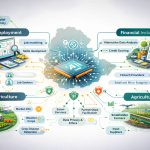
There are three common words in the current development sector that have been widely used: Market Systems Development (MSD), Financial Inclusion, and Digitalization. Each of these ideas is important on its own, but their full potential is realized when they come together.
Market systems development focuses on improving how different market actors work together. These actors include businesses, financial institutions, government offices, and service providers. The goal is to build systems that are strong, inclusive, and sustainable. Digital finance supports this goal by making services faster, cheaper, and easier to access.
For the past few years, Digitalization in MSD programs has been very limited, applied only in small areas, leaving significant potential for broader integration to drive inclusive and sustainable market impact. However, today, the integration of MSD programs with inclusive digitalization is gaining momentum. In many developing countries, including Ethiopia, digital tools are no longer optional they are becoming a key part of economic growth and inclusion. When digital solutions are used together with market systems development and financial inclusion, they can create real and lasting change.
Digital financial services, including uncollateralized digital loans, are growing quickly. These services are important because many people especially women, youth, small businesses, and displaced communities do not have assets, or formal documents to use as collateral. Digital credit, mobile money, and buy-now-pay-later services can help them access finance for the first time.
However, digital finance alone is not enough. Many people still face challenges such as low digital and financial skills, limited internet access, or lack of trust in digital services. Some may not fully understand loan terms or struggle with repayment due to unstable incomes. If these issues are ignored, digital systems risk excluding the very groups they aim to support.
This is where market systems thinking becomes critical. It looks beyond the technology and the product to the full system: fintech companies, mobile network operators, MSMEs, regulators, employers, and consumers. It asks questions like: Who is left out? Why? Which incentives and rules are shaping behavior?
By using a market systems approach, digital finance can be linked to real economic opportunities. Loans can support jobs, MSME growth, or skills training. Data from employment platforms or business transactions can be used responsibly to assess risk. Consumer protection, financial literacy, and inclusive rules ensure that digital finance grows sustainably and benefits everyone.
When digitalization, financial inclusion, and Market Systems Development (MSD) are combined intentionally, their impact goes far beyond simply expanding access. Together, they create inclusive, resilient, and sustainable markets that work for everyone. Producers, consumers, small businesses, and communities. Digital tools can streamline processes, improve transparency, and open up new opportunities, while financial inclusion ensures that all actors can participate meaningfully in these systems. MSD ensures that these interventions are not isolated but embedded within the broader market, strengthening the ecosystem as a whole.
The future of MSD programs depends on digital integration across multiple areas from service delivery to data collection, market intelligence, and customer engagement. By leveraging technology alongside financial inclusion strategies, programs can grow, scale, and deliver lasting impact, making markets not only more efficient but also more equitable and resilient in the long term.