Over the years working around Market Systems Development (MSD), one question has continued to come back: how do we help markets work better, not just for businesses that are already succeeding, but also for people and groups who are often left behind?
Traditionally, MSD has focused on understanding market failures and creating conditions where markets can become more inclusive and sustainable.
But markets are changing quickly. One of the biggest forces driving this change today is Artificial Intelligence (AI).
This made me think about a different question:
Can AI itself become a market systems intervention?
At first, it may sound unusual. We often think of AI as a tool something organisations use to automate tasks or improve efficiency. But when we look at AI from an MSD perspective, it represents something much bigger. AI has the potential to influence how the entire markets evolve.
AI Is Changing How Markets Work
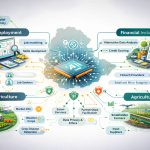
A functioning market depends on information, skills, and the ability of actors to make good decisions. AI is beginning to reshape all of these areas.
For example, a small business owner who previously struggled to understand customers, manage operations, or reach new markets can now access AI-powered tools that provide support at a much lower cost. A young person looking for employment opportunities can use AI to build skills, improve their services, and connect to emerging digital markets.
These changes are not only improving individual performance. They are changing relationships and behaviours within market systems.
This is where I see an interesting connection with MSD. We have always focused on interventions that address constraints and unlock opportunities. AI has the potential to do the same but at a much larger scale.
The Role of MSD: Shaping the AI Market, Not Just Using AI
One thing MSD has taught us is that sustainable change does not come from simply introducing solutions. It comes from creating systems where different actors have incentives and capacity to continue driving change.
The same thinking should apply to AI.
The conversation should not only be about introducing AI tools into development programmes. The bigger question is:
How do we create an AI ecosystem that allows businesses, workers, and communities to benefit?
In Ethiopia, this means thinking about the wider system around AI: digital skills, affordable access, local innovation, private sector participation, and policies that encourage responsible use.
Without attention to these factors, AI could increase the gap between those who have access to technology and those who do not.
What Could This Mean for Ethiopia?
Ethiopia has a growing digital economy, a large youth population, and increasing interest in technology-driven solutions. These create opportunities for AI to contribute to new business models, employment pathways, and improved market services.
But technology alone will not transform markets.
The impact will depend on how different actors respond whether businesses can adopt AI effectively, whether workers can develop relevant skills, whether local innovators can participate, and whether vulnerable groups are included in this transformation.
From an MSD perspective, our role is not to promote AI because it is the latest technology trend. Our role is to understand where AI can solve real market constraints and help create more inclusive opportunities.
Looking at AI through an MSD lens changes the conversation. Instead of asking, “How can we use AI in our programmes?”, we should also ask:
“How is AI changing the market systems we are trying to influence?”
AI is becoming more than a tool. It is becoming a force that shapes incentives, creates new markets, changes skills requirements, and influences how actors interact.
For practitioners working in market systems, this represents both a challenge and an opportunity.
The future of MSD will not only be about improving existing markets. It will also be about understanding and shaping the new forces like AI that are redefining how markets function.
The question is no longer whether AI will change market systems.
It already is.
The real question is: how can we make sure this transformation creates opportunities for more people?